


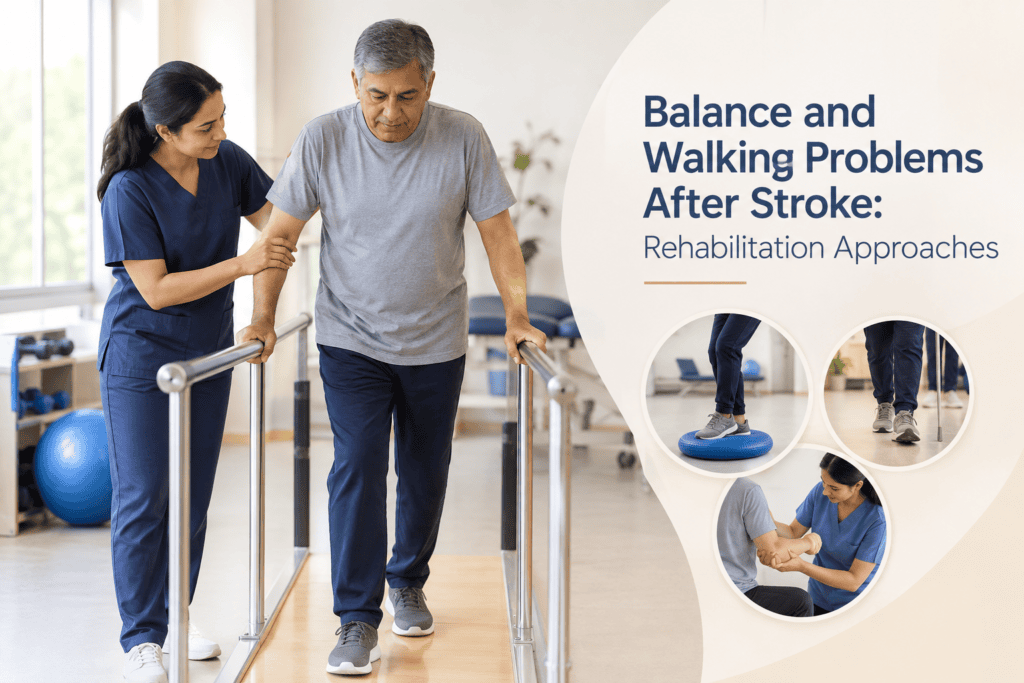
A stroke can change the way a person walks, stands, balances, and performs everyday activities. Weakness on one side of the body, reduced coordination, muscle stiffness, changes in sensation, and difficulty controlling movement can all affect mobility after a stroke.
For many stroke survivors, rehabilitation is an important part of the recovery journey. At Avanta Healthcare, rehabilitation and supportive care can be tailored around the individual’s functional needs, recovery goals, and level of independence.
If you are searching for a stroke rehabilitation centre in Bangalore, understanding the available rehabilitation approaches can help you make a more informed decision about ongoing care.
What Causes Walking and Balance Problems After a Stroke?
The brain controls many of the movements required for walking and maintaining balance. When a stroke affects areas involved in movement or coordination, the body’s ability to control these activities can be affected.
Common problems include:
- Weakness in one leg or one side of the body
- Difficulty maintaining balance
- Muscle stiffness or abnormal muscle tone
- Poor coordination
- Difficulty lifting or controlling the foot
- Uneven weight distribution
- Slow or unsteady walking
- Difficulty turning or changing direction
- Reduced confidence while walking
- Increased risk of falls
The extent of these problems varies from person to person. Therefore, stroke rehabilitation should be based on an individual assessment rather than a standard exercise programme.
How Does Stroke Rehabilitation Help Walking?
Stroke rehabilitation focuses on helping patients regain functional abilities and become safer and more independent in daily life.
A rehabilitation programme may include:
Physiotherapy
Physiotherapy is commonly used to address weakness, reduced mobility, balance problems, and difficulties with movement. A physiotherapist may develop exercises based on the patient’s strength, mobility, coordination, and functional goals.
Gait Training
Gait training focuses specifically on walking. Patients may practise stepping, weight shifting, foot placement, turning, starting and stopping, and walking with appropriate assistance or mobility aids.
The level of support is adjusted as the patient’s abilities change.
Balance Training
Balance exercises can help patients practise maintaining stability while sitting, standing, reaching, transferring, and walking.
Training may gradually progress from simple supported activities to more functional movements, depending on the patient’s ability and safety.
Strength and Mobility Training
Weak muscles can make walking and transfers more difficult. Targeted exercises may help patients improve functional strength and movement control.
Exercises may involve activities such as standing from a chair, controlled stepping, transferring between surfaces, and other movements relevant to daily life.
Why Choose a Neuro Rehabilitation Centre in Bangalore?
A neuro rehabilitation centre in Bangalore may be appropriate for patients who need specialised rehabilitation following a stroke or another neurological condition.
Neurorehabilitation can address more than walking difficulties. Depending on the patient’s needs, rehabilitation may also focus on:
- Upper-limb function
- Coordination
- Communication
- Swallowing
- Cognitive function
- Self-care
- Mobility
- Daily activities
A multidisciplinary approach can be especially useful when a stroke has affected several aspects of a person’s functioning.
When Should You Consider a Stroke Rehabilitation Centre in Bangalore?
A stroke rehabilitation centre in Bangalore may be considered when a patient needs regular, structured rehabilitation following hospital discharge.
Professional rehabilitation support may be useful for people experiencing:
- Difficulty walking independently
- Poor balance
- Significant weakness
- Difficulty transferring from bed to chair
- Reduced coordination
- Difficulty performing daily activities
- Ongoing mobility limitations after stroke
The appropriate setting should be determined according to the patient’s medical condition, safety, mobility, and rehabilitation goals.
Centre-Based Rehabilitation vs Home Rehabilitation
Rehabilitation does not necessarily have to take place in the same setting for every patient.
A rehabilitation centre may offer access to structured therapy, rehabilitation equipment, and multiple professionals. Home-based rehabilitation may be more practical for selected patients who have difficulty travelling or who need therapy within their familiar home environment.
Home healthcare in Bangalore can provide additional support for patients who require assistance after returning home, subject to their individual care requirements.
The choice between centre-based and home-based care should be based on the patient’s clinical and functional needs.
Home Care Services in Bangalore After Stroke
Recovery often continues after a patient leaves the hospital. Some stroke survivors may need assistance with mobility, personal care, daily activities, or routine healthcare needs.
Home care services in Bangalore can provide support at home depending on the services offered and the patient’s requirements.
These services may include:
- Nursing support
- Physiotherapy visits
- Assistance with mobility
- Personal care
- Support with daily activities
- Medication-related assistance
- Coordination with healthcare professionals
Home care should complement, rather than replace, appropriate medical and rehabilitation advice.
Nursing Services at Home Bangalore
Patients with significant care requirements may need professional nursing support after hospital discharge. Nursing services at home Bangalore can help families manage certain nursing and supportive care needs in a home environment.
The specific services required depend on the patient’s condition. Families should check the qualifications of nursing professionals, their responsibilities, supervision arrangements, service timings, and emergency escalation procedures before selecting a provider.
For families who specifically require a female nurse for home care Bangalore, availability can be discussed with the home healthcare provider based on the patient’s care requirements.
How Can Families Reduce the Risk of Falls?
Fall prevention is an important part of stroke recovery, especially when balance and walking are affected.
Families can make the home safer by:
- Removing loose rugs and unnecessary clutter
- Keeping frequently used items within easy reach
- Providing adequate lighting
- Following recommendations regarding walking aids
- Installing suitable support rails where required
- Keeping pathways clear
- Providing assistance when the patient is not yet safe to walk alone
A physiotherapist or rehabilitation professional can also assess mobility and recommend appropriate safety strategies.
How Long Does Stroke Rehabilitation Take?
There is no universal timeline for stroke rehabilitation. Recovery differs depending on the severity and location of the stroke, the patient’s overall health, existing conditions, functional limitations, and response to rehabilitation.
Some people may make significant improvements during the early stages of recovery, while others may require longer-term rehabilitation and supportive care.
Regular reassessment can help the rehabilitation team adjust the programme as the patient’s abilities change.
Other Healthcare and Rehabilitation Services
Patients and families may require different forms of care at different stages of recovery.
For example, post-operative care in Bangalore can support people recovering after surgery, while cardiac rehabilitation in Bangalore may be recommended for eligible patients recovering from certain cardiovascular conditions.
For individuals living with serious or progressive illnesses, palliative care rehabilitation may focus on maintaining comfort, function, dignity, and quality of life rather than pursuing intensive functional recovery.
These services have different objectives and should be selected according to the patient’s individual medical needs.
Why Individualised Rehabilitation Matters
No two stroke recoveries are exactly alike. One patient may primarily need help with walking, while another may have difficulties with speech, swallowing, hand function, memory, or daily activities.
An individualised rehabilitation plan allows therapy and supportive care to focus on the patient’s specific challenges and goals.
At Avanta Healthcare, the focus can be on providing appropriate rehabilitation and supportive care while helping patients and families navigate the recovery process.
Frequently Asked Questions
1. Can walking problems improve after a stroke?
Yes, walking ability can improve with appropriate rehabilitation. The extent of recovery varies depending on the severity of the stroke, affected brain area, overall health, and response to rehabilitation.
2. How does physiotherapy help stroke patients walk again?
Physiotherapy can focus on muscle strength, balance, coordination, weight shifting, gait training, and functional movements to help patients improve mobility and walking safety.
3. What is stroke rehabilitation?
Stroke rehabilitation is a structured programme designed to help patients regain or improve movement, balance, communication, daily activities, and independence after a stroke.
4. When should stroke rehabilitation begin?
Rehabilitation is generally started as soon as the patient’s medical condition is stable and the treating healthcare team considers it appropriate. The timing and intensity depend on the individual’s condition.
5. What happens at a stroke rehabilitation centre in Bangalore?
A stroke rehabilitation centre may provide services such as physiotherapy, gait and balance training, occupational therapy, speech therapy, nursing support, and other rehabilitation services based on the patient’s needs.
6. Can stroke rehabilitation be done at home?
Yes, selected patients may receive home-based rehabilitation when it is considered safe and appropriate. Home healthcare services may include physiotherapy, nursing assistance, and support with daily activities.
7. How long does stroke rehabilitation take?
There is no fixed duration. Recovery can take weeks, months, or longer depending on the patient’s condition, functional limitations, rehabilitation goals, and progress.
8. Which rehabilitation centre is suitable for a stroke patient?
The right facility should have qualified rehabilitation professionals, experience in stroke care, appropriate therapy facilities, safety measures, and an individualised rehabilitation approach.
9. How can I find a neuro rehabilitation centre in Bangalore?
Look for a centre with experience in neurological rehabilitation and services relevant to the patient’s specific needs, such as physiotherapy, gait training, occupational therapy, and supportive nursing care.
10. Can home nursing help a stroke patient after hospital discharge?
Depending on the patient’s requirements, professional home nursing can provide assistance with certain nursing and daily-care needs after discharge and can work alongside the patient’s rehabilitation plan.
Conclusion
Balance and walking difficulties can significantly affect independence after a stroke. With the right rehabilitation approach, patients can work toward improving mobility, strength, coordination, balance, and functional abilities based on their individual recovery needs.
At Avanta Healthcare, patients and families can receive rehabilitation and home healthcare support tailored to their individual needs. With appropriate professional guidance and personalised care, the focus remains on helping patients achieve greater comfort, mobility, safety, and independence during their recovery journey.